

Bigger isn’t necessarily better. At MINO Omakase & Sake Bar in Boca Raton, Executive Chef Jezhiel Mark “JM” Canlas focuses on the tiniest of details, like the perfect rice grain, the thinnest sashimi, and the silkiest caviar pearl. It’s also reflected in the concept’s name, inspired by the minnow, a small yet essential part of its own habitat. The space itself is intimate, with a 10-seat omakase counter specializing in innovative composed dishes, not just sushi or nigiri, and a 20-seat lounge that serves a distinct set of small, shareable plates.
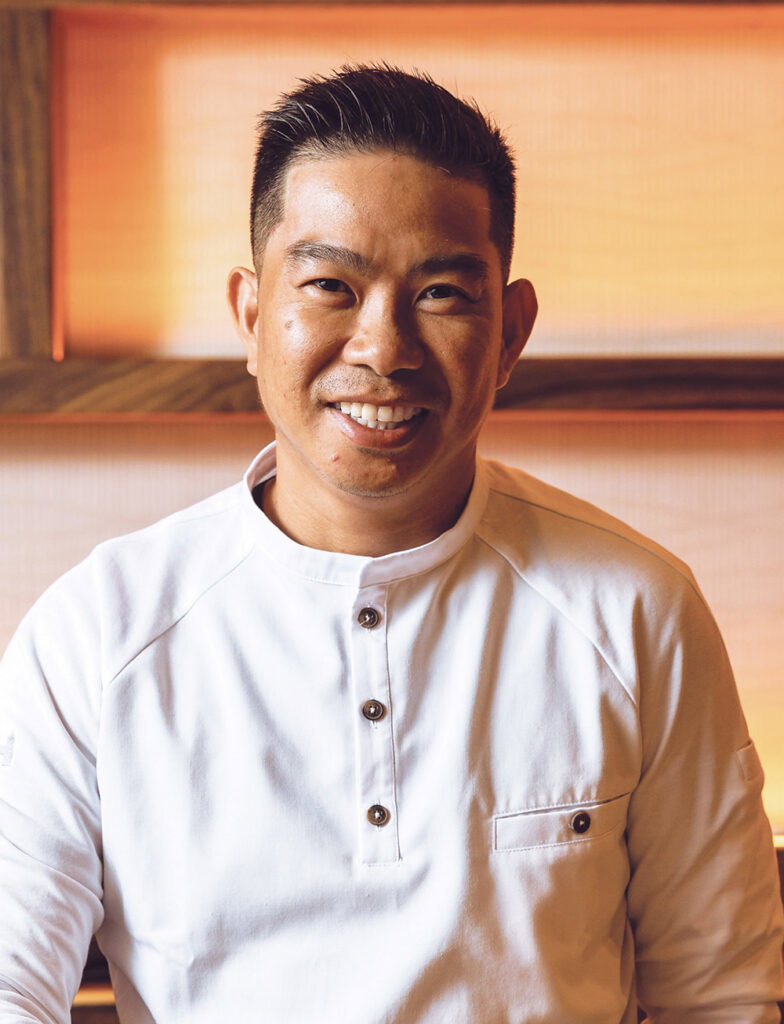
It’s taken the Filipino chef years to refine his craft. Canlas cut his teeth at hot spots like Miami’s MILA Omakase and Delray Beach’s former Lionfish. When the group behind Kapow Noodle Bar reached out, he jumped at the chance to run his own kitchen. “Working with the team I selected, which I know will make the restaurant great, is one of my highlights,” he says.
The old band is back together, including his Lionfish sous chef and pastry chef. “I also want to showcase my own food, with a touch of my culture,” Canlas adds. Look out for dishes featuring Filipino ingredients like calamondin (Philippine citrus), ube (purple yam), and Southeast Asian pandan leaves.
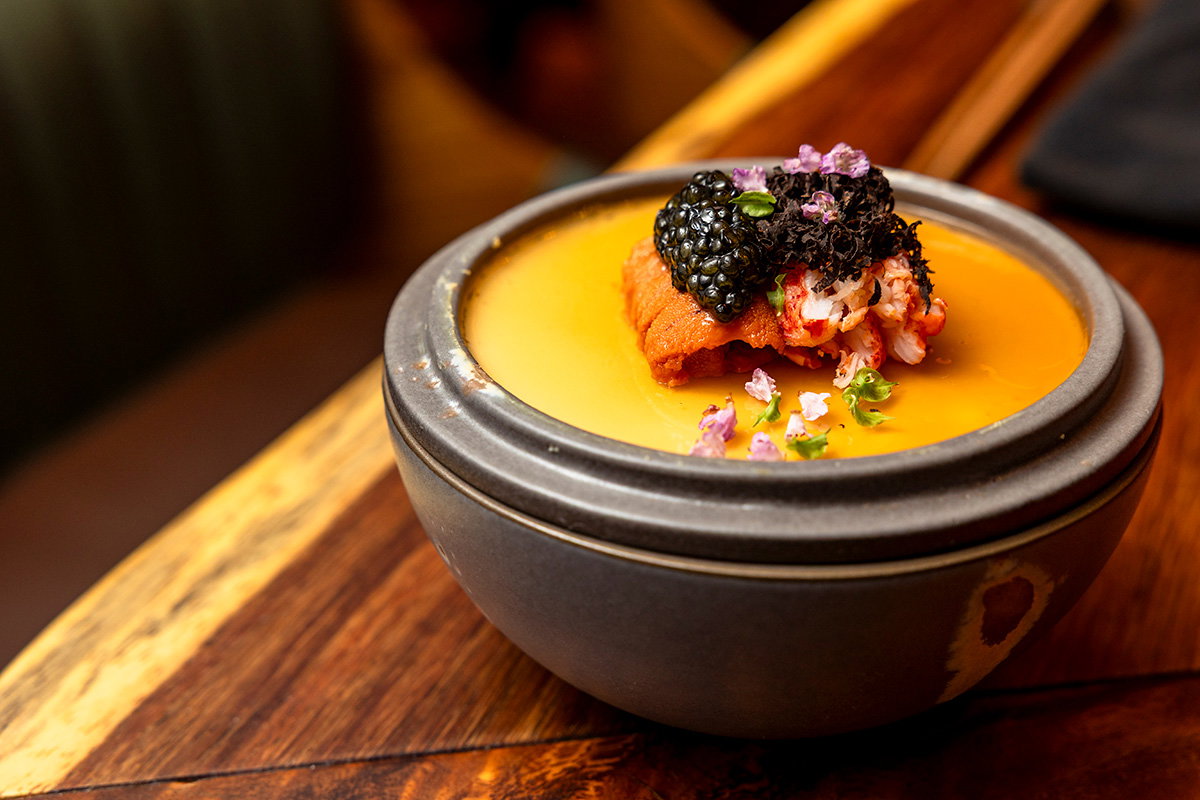
Canlas packs bold, powerful flavors into his chawanmushi, which he delicately places before each guest and proudly unveils by palming a petite cloche and swiftly lifting it away. This take on the classic egg custard is topped with uni, crab, and caviar, giving this Japanese comfort food an elegant glow-up. No matter what you top your chawanmushi with, Canlas is confident that re-creating it at home will be just as delightful.
RECIPE
- 2 pieces of kombu100 grams of katsuobushi
- 100 grams of egg yolks
- Fall ingredients of your choice (e.g., shiitake, maitake, chestnut, pumpkin, sweet potato)
- Mitsuba/parsley to garnish
Prepare Dashi Stock (300 ml)
- Soak 2 pieces of kombu in cold water 20–30 minutes.
- Heat gently to just below a simmer; remove kombu before boiling.
- Add 100 grams of katsuobushi, simmer 1–2 minutes, then turn off heat.
- Steep two to three minutes until flakes sink.
- Strain without pressing to keep broth clear.
Prepare Custard
- Gently whisk 100 grams of egg yolks until smooth (avoid air bubbles).
- Slowly combine with dashi, stirring lightly.
- Strain for a silky texture.
- Season lightly with salt, soy sauce, and a touch of mirin.
Prepare Fillings
- Use fall ingredients of your choice; cut into small, evenly sized pieces for even cooking.
Assemble
- Place fillings into small heatproof cups.
- Pour custard mixture over, nearly full.
- Skim surface foam for a smooth finish.
Steam
- Cover cups (foil or lids).
- Place cups in a large saucepan with about 1 inch of boiling water; cover to steam.
- Steam over medium-high heat 10-11 minutes.
- Custard should be set with a slight jiggle in the center.
Serve
- Rest briefly, then serve warm.
- Garnish with herbs (mitsuba/parsley) or extra seasonal ingredients.
Pro tips
- The ratio of egg yolks to broth is 3:1 (300 ml of broth to 100g of egg yolk).
- Topping options are endless; just avoid anything too sweet.
- Serve it chilled, at room temperature, or warm.
- Best paired with a drier Junmai Daiginjo sake or an acidic white wine (unoaked if Chardonnay).
Hungry for more food news? Visit our food page, and subscribe to the magazine for the most delicious coverage of Boca and beyond.