
“How did you end up in a synagogue playing games with Jewish grandmas?”
That daring question, proposed by who I would later know as Elaine, has a simple answer: mahjong.
To the uninitiated, it’s a 19th century Chinese game that has been adopted by said “Jewish grandmas” for some time now. In fact, they created the Americanized version I played on a warm July afternoon. Back in 1937, a time of great turmoil in the world and especially in the Jewish community, a group of lady enthusiasts banded together to create the National Mahjong League. The rule card, updated every year by the league, is used as the standardized rule set for mahjong addicts.
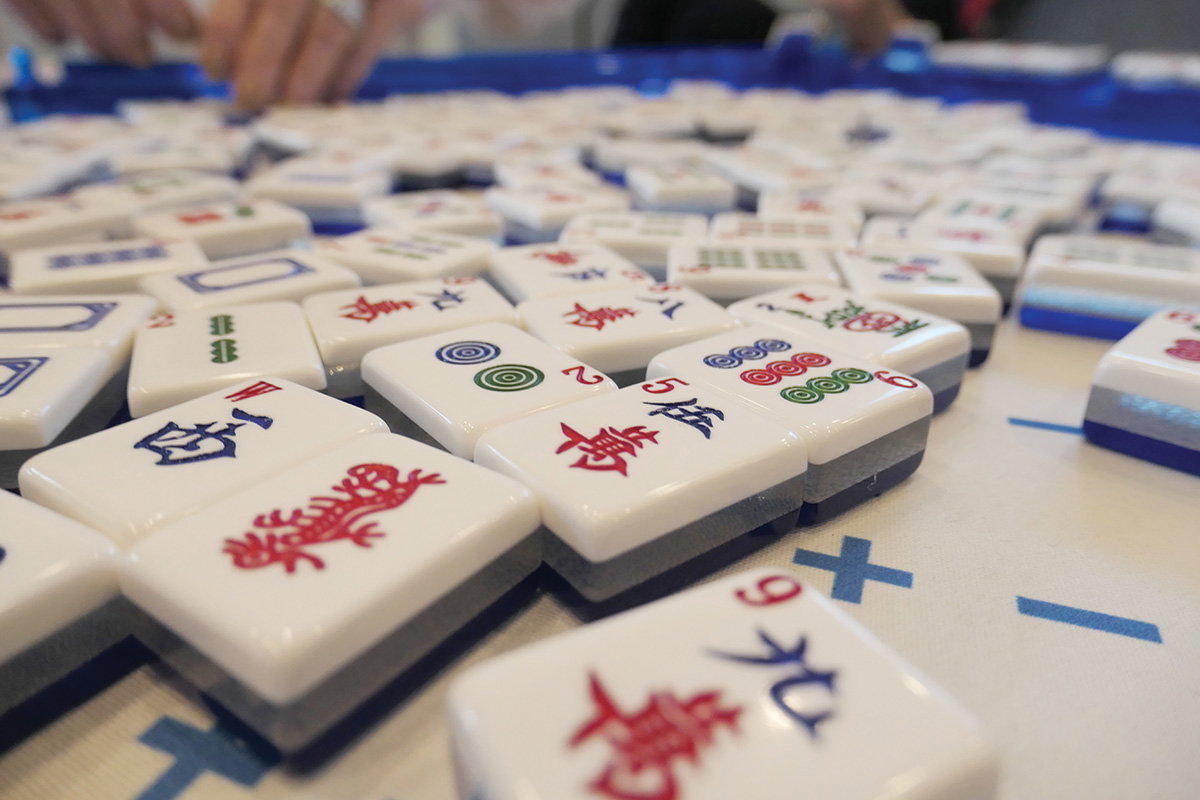
Summarizing what the game entails, imagine dominoes and poker rolled together. It’s a four-player game, featuring more than 150 tiles (all with different suits such as dots, bamboos, and dragons), with the objective of making a sequence of 14 winning tiles. Maybe it’s the Gen Z in me or the lack of siblings growing up, but I’ve never been a big fan of these kinds of games—too many rules and complications that a good trivia competition doesn’t have. It may be a bit cliche, but it was through experiencing it through other eyes that I could finally make sense of this concept. Make no mistake; the following story is about my cool lady squad at B’nai Torah more than it is about me.
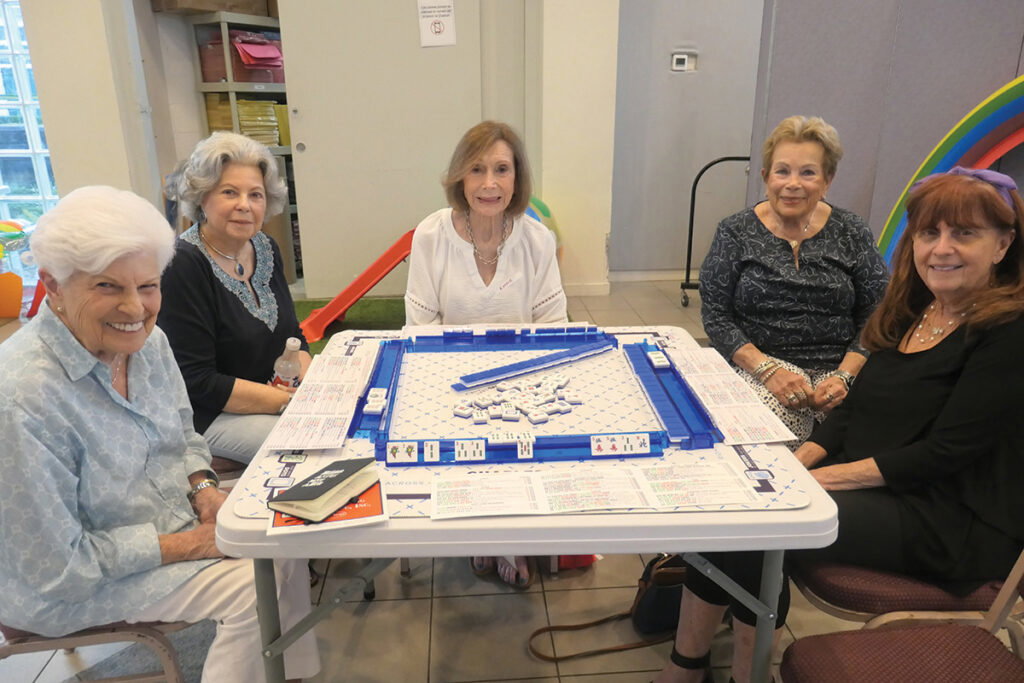
The first thing I learned as I entered the ring with my companions was that everybody had a reason for playing. Rhoda, a woman who looked like my actual grandma, just wanted to keep her brain busy. Ronnie began her journey because of her daughter and “the TikToks.” Elaine used to play and was now enjoying a refresher course, which we all agreed she definitely didn’t need.
For my first partner, Rochelle, mahjong was an inheritance. Her mother used to play this tile game everywhere she went, despite her daughter not understanding a single thing from it. A couple of years after her passing, Rochelle found her mother’s famed mahjong set in her closet and thought, why not? As proof that love is eternal, the 40-year-old set looked as pristine as the finest sets in the world, perhaps even better.
It was with Rochelle that I discovered my favorite part of this game. In the second phase of mahjong, you must commit to a certain set of tiles once you reach a winning hand. Rochelle and I yelled “committed!” a lot (despite her being happily divorced, we joked). By the end of our partnership, I had won my first mahjong game!
If my first round felt like a pleasant afternoon with family, my second was akin to a war room. My experienced general, Elaine, didn’t even need the mahjong cheat card to know the more than 20 tile combinations! While I was making busy talk with the ladies, Elaine would suddenly say “it’s your turn now” to whoever was unfortunate enough to listen to my ramblings instead of playing the game. Ultimately, we lost, but Elaine took it well; lose a battle but win the war, as some may say.
Sitting at that tiny mahjong table, exchanging stories with people I never thought I’d meet, I felt history was repeating itself. Rochelle and Elaine couldn’t be further apart; one was wearing a cute purple headband and reveled in not understanding the game; the other fashionably adorned herself with gold bracelets and had an impressive attention to detail. But here they were, comparing pictures of their puppies on their iPhones. I imagine a similar scene had played out in 1937—mahjong bringing people together during troubled times.
B’nai Torah (6261 S.W. 18th St. in Boca Raton) hosts mahjong for all levels on Tuesdays at 1:15 p.m. and Thursdays at 5:45 p.m.
This story is from the November/December 2026 issue of Delray magazine. For more like this, click here to subscribe to the magazine.